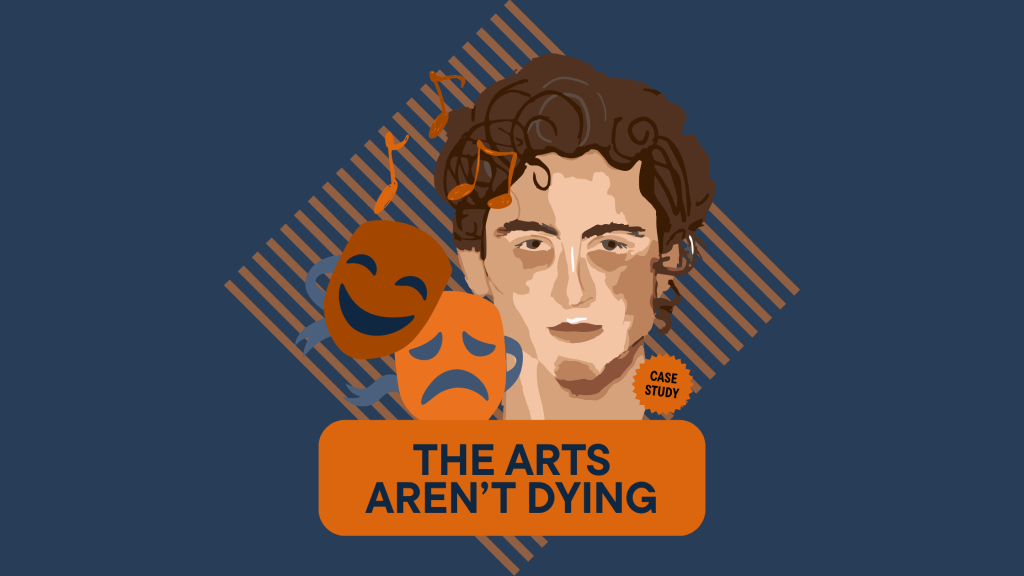
When actor Timothee Chalamet made a seemingly flippant comment about the popularity of opera and ballet, the Internet responded with an uproar. In a Variety interview, he said, “I don’t want to be working in ballet or opera or, you know, things where it's like ‘Hey, keep this thing alive,’ even though no one cares about this anymore.”
Musical artists and average social media users alike have heavily criticized his perspective, asserting that people do indeed care about the fine arts. You could explore either side of the argument. On the one hand, ballet and opera attendance rates have significantly declined since the mid-1900s; on the other, many statistics are skewed by low numbers during the pandemic, and shows continue to sell out across the world.
Those who agree with Chalamet say that certain, more traditional art forms are dying, but this statement may be an exaggeration. Opera and ballet are evolving alongside more diverse audiences, and Chalamet's comment was, in some ways, a PR practitioner's dream, as it has brought this truth to the forefront of the media.
First, some context: At their conception, the fine arts were primarily commissioned and enjoyed by those with more socioeconomic resources, i.e., members of the royalty or local aristocracy. Opera and ballet performances have long faced backlash for lacking diversity in their themes and cast, most likely due to the audiences they initially served. However, in the 21st century, many schools and theaters are making significant progress in increasing representation and inclusivity, though there is still a lot to be done. For instance, Misty Copeland was the first African American female principal dancer at the American Ballet Theater in 2015; her popularity was a milestone in broadening the audience for ballet. In addition, choreographers are infusing more jazz and hip-hop influences into current shows.
Rather than highlighting possible decline, moments like the recent Chalamet controversy highlight how opera and ballet houses can capitalize on renewed public attention, albeit negative, and transform criticism into opportunity.
On March 5, The Metropolitan Opera House, located in New York City, posted a TikTok montage of various stage scenes, captioning the video, “This one’s for you, Timothée Chalamet…” The TikTok promptly received over 2 million views, and the comments contained a mixed bag of reactions. Some defended the fine arts’ relevance, and others expressed newfound curiosity and willingness to see an opera show in the future.
By engaging directly with a trending topic and pertinent celebrity figure, The Met effectively inserted itself into mainstream digital culture and appealed to its younger viewers. Most opera houses are no longer relying solely on ticket sales and traditional marketing. Instead, they are building digital environments where virality can play a major role, just like in any other business or organization. Similarly, the Royal Opera House in London has a communications team of over 150 members, with a select few specializing in social media content. They also sell discounted tickets to patrons ages 16-25.
Organizations like the New York City Ballet and Paris Opera Ballet increasingly use short-form video on Instagram or TikTok to showcase rehearsals and other behind-the-scenes footage as well. Humorous or touching interviews with cast members establish a greater sense of connection and relatability between performers and audience members. In fact, one of Teen Vogue’s most popular YouTube videos was a day in the life of Kayla Mak, a 16-year-old ballet dancer, as many viewers developed a newfound appreciation for her dedicated lifestyle.
Many major opera houses even offer live streaming to those who cannot make it to their physical location. Overall, a major goal is making the fine arts more accessible, and this multifaceted shift means that the arts are simply adapting, not resisting extinction like Chalamet’s quote suggests.
The backlash to his comment proves the opposite of what he indicated: people do care about the arts. They might not appreciate them in the same way as before, but the interest is still there, and in sometimes unexpected places, such as a TikTok comment section, for example. Ultimately, institutions are catering to this evolving interest by embracing controversy, new technologies, and audience expectations. If they continue to do so, new generations will remain curious about ballet, opera, and other art forms that may soon become part of the national conversation.