Rebranding Done Right: Abercrombie & Fitch’s Journey to the Top
Rebranding Done Right: Abercrombie & Fitch's Journey to the Top
By Ellie Hinkle
Illustration by Eliza Hodges
Rebrands can be daunting. It takes time, money and a lot of resources to pull one off successfully, and they often don’t land with the public. However, a well-done rebrand can take a company from falling behind to being a top player in its industry. One case that demonstrates this perfectly is the transformation of Abercrombie & Fitch, a clothing company that went from being labeled “America’s Most Hated Retailer” in 2016 to one of the best-selling clothing brands in the country less than a decade later.
Abercrombie has undergone numerous changes since its founding in 1892. After filing for bankruptcy in the 1970s, the company shifted its focus away from outdoor apparel and began targeting the teenage market. The mission statement was amended in the 1990s to reflect this change, and new leadership was implemented to make the brand more youthful. Queue the typical Abercrombie you’d picture in any mall in the 2000s - dark and moody lighting, loud music and photos of thin, white models pasted around the store.
For a few years, this model worked. Throughout the early and mid-2000s, sales were high and Abercrombie was a staple in the wardrobes of countless American teenagers. However, when competitors began to introduce more inclusive sizing and diversity in their advertising, Abercrombie failed to keep up. Controversy boiled over in 2013 when then-CEO Mike Jeffries reportedly said Abercrombie’s clothing was only for “cool, good-looking people”, further positioning it as an exclusive brand and negatively separating it from competitors. The nail in the coffin was the Netflix documentary White Hot, which exposed accusations of racism and other missteps Abercrombie had taken since its heyday.
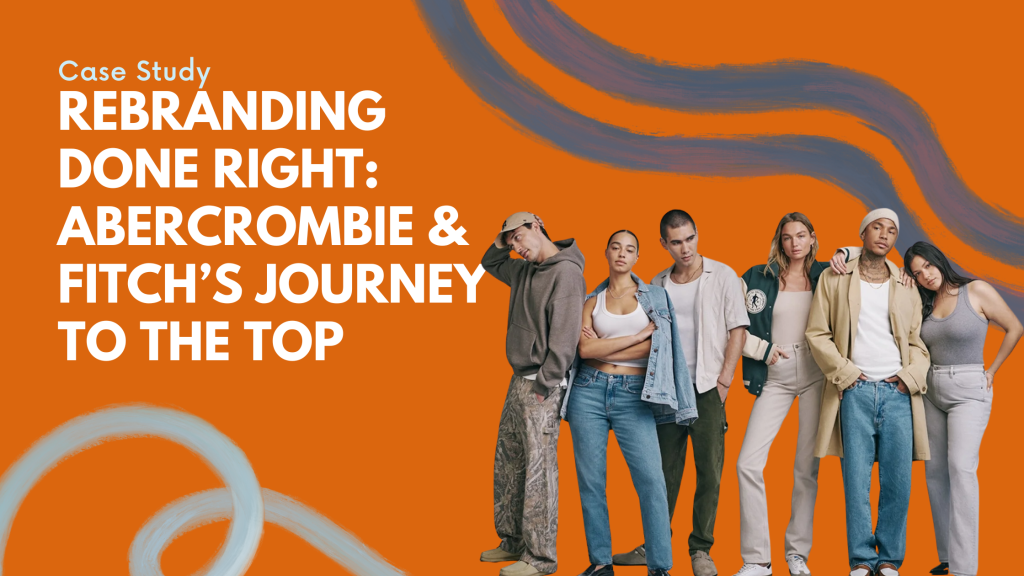
By the end of the 2010s, it was apparent that Abercrombie needed a refresh. In 2019, with new leadership in place yet again, a complete overhaul of products, design, and marketing began. Abercrombie’s focus shifted towards young adults and millennials, with simple designs featuring neutral colors and lines of professional and formal attire. Beyond changes to the clothing, there was a noticeable shift in Abercrombie’s marketing strategy. Ads went from featuring suggestive photos of white models to toned-down imagery with models of all different races and sizes. This inclusivity also carried over into the products themselves, with the introduction of the Curve Love line marking a major step towards Abercrombie becoming a store for everyone.
While the emergence of COVID-19 in 2020 briefly hurt its growth, Abercrombie quickly began to rise as one of the top clothing retailers in the United States. In 2023, Abercrombie was the best-performing stock on the S&P index, boasting over $4 billion in profit. This success has been sustained in the years since, with revenue nearing $5 billion in 2024 and 2025. Abercrombie’s efforts paid off, and it is now a well-regarded company with a revived, loyal customer base.
Abercrombie’s rebrand is a masterclass in appealing to the right audience and adapting to fit with trends and changing times. As teenagers who grew up shopping at Abercrombie matured into adults with careers, the brand began catering to their needs with simpler, professional clothing and less bright colors. Abercrombie has carved out a niche for itself, offering upscale clothing for people in their twenties at a more affordable price point than other high-quality clothing brands. Lastly, when inclusion moved to the forefront of social discussions, Abercrombie listened and adjusted their marketing strategy to speak to a diverse audience.
Instead of letting controversies tarnish their image, Abercrombie addressed its issues head-on and repositioned itself as a reputable, successful brand in a matter of a few years. That’s the power a rebrand can have - taking you from hated to wildly popular with just a few changes. The story of Abercrombie is one any brand can learn from, and a model of truth, authenticity and adaptability.