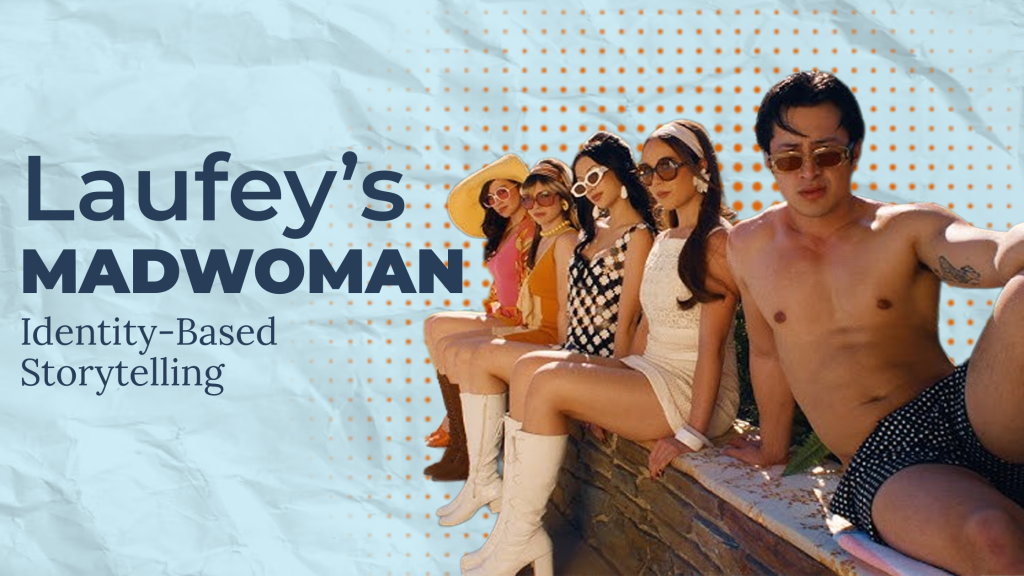
On April 13, Icelandic-Chinese singer Laufey released the music video for her new song “Madwoman,” which was added to the deluxe version of her album “A Matter of Time.” Its release was highly anticipated, as Laufey gradually announced via Instagram the different actors that were going to be featured in the video. Most notably, they were all of white and Asian descent.
The actors include Alysa Liu, Megan Skiendiel, Lola Tung and Hudson Williams, all occupying prominent roles in Laufey’s retro, 70s themed music video. Various comments underneath the YouTube video spotlighted the casting choices, with some humorously calling the group the “Wasian Avengers.” It is important to note that not everyone loves or uses this term, but nonetheless, many people were excited about seeing these faces centered so deliberately in such a mainstream music production. Laufey was slated to perform at Coachella the following week, proving her rising fame in the industry.
The audience’s enthusiasm is understandable, given the historically limited representation of Asians and mixed Asian groups in music media. The video’s juxtaposition between an older, vintage aesthetic and an inclusive lens stands out, though for the past couple of years, Laufey, as a mixed-race artist, had often reimagined this jazz-pop, Western glamour through a more modern perspective.
As a whole, the “Madwoman” music video functions as a marketing campaign rather than just a singular creative project. More importantly, it effectively leverages identity as part of its allure. Multiracial people are a statistical minority in the United States, though their population is quickly growing. As someone who is half Filipino and half white, it is extremely gratifying to witness celebrities who look like me and are gaining international attention. Olivia Rodrigo is a prime example.
Laufey’s exact intention was to host a space for Asian and Pacific Islander representation. In a statement, she said: “Growing up, I felt a general lack of representation for people who looked like me in music and media. With the ‘Madwoman’ video, I wanted to be that representation.”
In regard to the marketing strategies themselves, Laufey’s team was successful in creating sustained engagement across social media. Moreover, their casting choices appealed to a very wide swath of fans, ranging from Olympics junkies to “Eyekons” — the official fandom name for Katseye, the international girl group that Megan Skiendiel is a member of. Each online reveal caused buzz and engagement to skyrocket, and the Youtube video garnered over 3 million views in the first 24 hours.
However, there is a risk of creating a feedback loop: If one type of representation is seen as successful, then the more it is replicated by other artists and campaigns. Of course, this is amazing for those identifying as white and Asian, but other biracial groups might fall out of the spotlight and receive less visibility in similar productions. Though a music video may succeed on its own terms and build brand image, it can add to preexisting marginalization.
Thus, “Madwoman” is a case study in how identity can be packaged and marketed in contemporary music marketing. From this recent video, we learn that representation doesn’t solely refer to who is cast and included; rather, it also encompasses which identities are deemed “marketable” in the first place.
But in the end, Laufey’s most recent music video demonstrates a very positive point — that audiences are becoming more responsive to identity-conscious storytelling. Because of this evident engagement and excitement, it is my hope that future directors continue to push the envelope and bring in an even wider range of multifacial identifiers. It’s only “A Matter of Time.”